Yatra
Pilgrimage and yatra
Char Dham, Vaishno Devi, Haridwar, Kurukshetra, Salasar, Amritsar and Ayodhya, with the car held for the whole yatra. Hill sections are charged at the same per kilometre rate as the plains, because the rate card has no separate hill figure on it. On several of these the road stops well short of the shrine, so the driver waits at the parking with your bags while you go up on foot or by pony.
- From
- ₹12.00a kilometre in a sedan. Every class and every charge is on the rate card.

Where the road ends on each of these
Measured from Delhi, because that is where most parties start, though a duty can begin at your own address instead. The drive time is the easy half. The half that decides how many nights you book is where the vehicle has to stop, and that is set by the road and by the state rather than by us.
Through Meerut and Roorkee.
The car gets to the road above the ghats and no further, because Har ki Pauri is shut to vehicles. He parks where he is allowed to and waits, and on an aarti evening that walk back takes longer than it looks on a map.
The GT Road north through Sonipat, Panipat and Karnal.
The one on this list that is a day out rather than a yatra. Brahma Sarovar, Jyotisar and the Bhadrakali temple all have parking at the gate and the walking between them is flat.
Through Rewari and Narnaul, into Shekhawati.
The road reaches the temple town itself. The parking is a short walk from the mandir and it fills well before dawn on the days the crowd comes, so an early start is worth more here than an early finish.
The GT Road through Ambala, Ludhiana and Jalandhar.
The car reaches the temple parking and the walk from there is short and shoeless. If Wagah is on the plan, the retreat ceremony fixes the hour you have to leave Amritsar by, not the other way round.
The GT Road to Jalandhar, then Pathankot and Udhampur.
The road ends at Katra. The Bhawan is about 12 km up from there, walked or by pony or by palki, and the driver waits at Katra for as long as the darshan takes.
Haridwar and Rishikesh, then the hill road by Devprayag and Rudraprayag.
This is where a private vehicle stops on the Kedarnath leg. A shared shuttle runs the last stretch to Gaurikund and the climb starts there. The car waits at Sonprayag until you come back down.
Through Lucknow, then the last stretch east.
Two long days on the highway rather than one, for most parties, and the halt in the middle is worth deciding at the quotation stage. The car reaches the town and the parking is a walk from the complex.
Run times are typical door to door in normal traffic, and a wedding morning or a fog day is not normal traffic. The line on the map marks the two places, not the road between them.
The paperwork and the taxes on a hill yatra
Not one of these is ours to set and every one of them is knowable before the party leaves. A yatra that goes wrong usually goes wrong on one of them rather than on the driving.
- Uttarakhand yatra registration
- Before you travel
- Every yatri is registered with the state before the Char Dham, and the photo identity you registered on is what gets checked at the barriers going up. Tell us at the enquiry stage how many are travelling and on which documents.
- The vehicle's own trip card
- Per route
- A vehicle on the Char Dham route carries a trip card of its own, separate from the party's registration, and it travels with the driver rather than with you.
- Inter-state permit
- Per state, per trip
- A tempo traveller or a coach crossing a state line buys one for each state it enters. It goes on the bill at what it cost with the receipt against it.
- Hill entry and green tax
- At the boundary
- Uttarakhand and Himachal both levy one on the way in. It is passed on at actuals and it is the charge that surprises a party travelling this road for the first time.
- Hill kilometres
- No loading
- The card carries one per kilometre figure for each class and there is no second figure anywhere for a hill kilometre. Rishikesh to Barkot is charged the way the highway is charged.
What goes up the hill roads
Ordered for the hills and not for the plains, which is the opposite of every other page here. The sections above Rishikesh and above Katra are where the class actually gets decided, and a family that would take a sedan to Amritsar will not take one to Kedarnath.
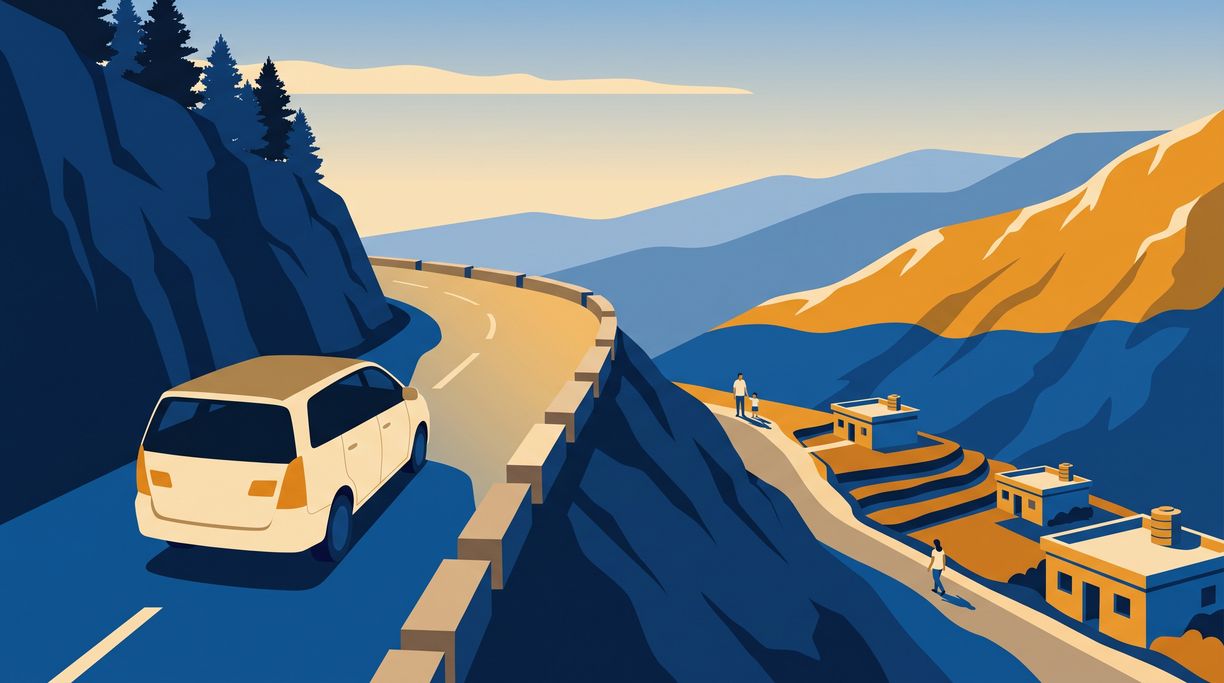
Full-size MPV
Toyota Innova Crysta, or similar
- Seats
- 7
- Per km
- ₹19.00
Compact MPV
Maruti Ertiga, Kia Carens, or similar
- Seats
- 6
- Per km
- From ₹14.00
Sedan
Maruti Dzire, Honda Amaze, or similar
- Seats
- 4
- Per km
- ₹12.00
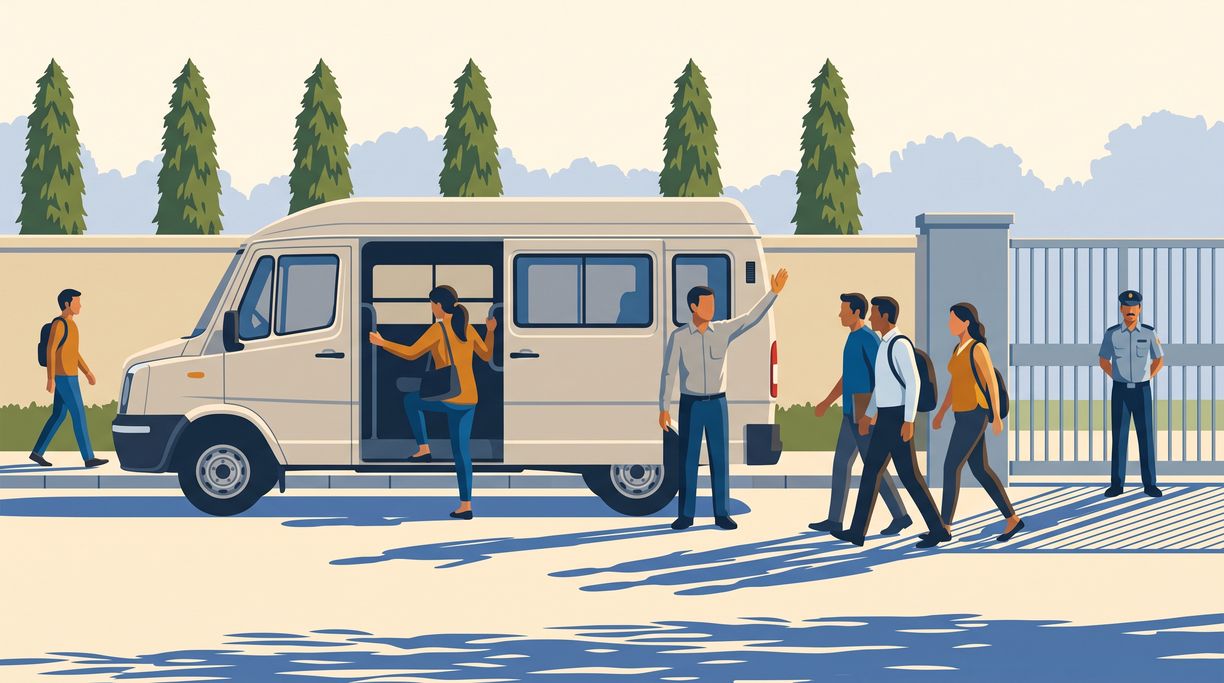
Tempo traveller
Force Traveller 12/17/25, Force Maharaja 20, Force Urbania 17, or similar
- Seats
- Up to 25
- Per km
- From ₹26.00


Effective . Driver allowance is charged per calendar day and is on the rate card with everything else.
What the fare covers
In the quoted fare
- Fuel and running cost
- Whatever the trip burns.
- The chauffeur
- His driving charges for the duty.
- Maintenance, insurance and air conditioning
- The vehicle is insured and serviced, and the AC runs.
- Hill sections at the plains rate
- One per kilometre rate per class on the card and no separate figure for a hill kilometre. Rishikesh to Barkot is charged the way the highway is charged.
- The days the car stands and waits
- At Katra and at Sonprayag the vehicle cannot follow you up and it does not go home either. Those are days the car is held, so what runs on them is the driver allowance and not a fresh trip charge.
Charged on top
- Hill entry and green tax
- Levied by the local authority on the way in. At actuals, and named on the quotation before you confirm.
- Inter-state permit
- For a tempo traveller or a coach crossing a state line. At actuals, with the receipt on the bill.
- Driver allowance₹300 to ₹600 a day
- Per calendar day the car is held, including the day it comes back.
- The driver's night halt
- On a multi-day trip where there is no driver accommodation at the hotel. We tell you before the trip which it will be.
- Toll
- At actuals, and the FASTag statement is shared with the bill.
- Parking
- At actuals, with the receipt.
- State entry tax
- Where the trip crosses a state border. At actuals, and named on the quotation before you confirm.
- GST5%
- Shown as its own line on the quotation and on the invoice.
Kilometres are whatever the odometer runs across the whole yatra, totalled once at the end. A day the car stands at Katra adds no kilometres and it does add the driver allowance, because the vehicle is still held for you. The 250 kilometre minimum on the card is worked once against that total rather than once for each day of the yatra. The count starts at your pick-up address and stops where you finish.
The figure on your quotation is the figure you pay. Everything payable at actuals is a named line on it, with a number against it, before you confirm. Nothing is added afterwards.
What a yatra party rings to ask

How close does the car actually get to the temple?
It varies by shrine and it is worth knowing before you count your days. At Badrinath the road reaches the town itself. At Gangotri the parking is a short walk from the temple. At Yamunotri the vehicle stops at Janki Chatti and the rest is about six kilometres on foot, by pony or by palki. At Kedarnath the road ends at Sonprayag, a shared shuttle takes you the last few kilometres to Gaurikund, and the climb from there is about sixteen kilometres. At Vaishno Devi the car stops at Katra. Wherever it stops, that is where the driver and your luggage wait.
Do we pay for the days the car is only waiting?
You pay the driver allowance for those days and nothing else, because no kilometres are running. The allowance is a published figure for each calendar day the vehicle is held, it is on the quotation as its own line before you confirm, and a waiting day is not charged as a fresh trip.
Is hill driving charged at a higher rate?
No. The rate card carries one per kilometre rate for each class and it applies on the hill sections exactly as it applies on the highway. What is extra is the state hill entry and green tax, which Uttarakhand and Himachal both levy on the way in, and that is passed on at what it actually cost with the receipt.
What paperwork does the Char Dham need?
Every yatri has to be registered with the Uttarakhand government before travelling, and you carry the same photo identity you registered with, because it is checked at the barriers on the way up. The vehicle needs its own trip card for the route. Tell us at the enquiry stage how many people are travelling and with which identity documents, so nothing is being sorted out at a barrier at seven in the morning.
Where does the driver stay and rest on a ten day yatra?
In the driver room, at hotels that keep one, and that costs you nothing. Where the hotel has none, his night halt is a separate line on the bill and the office tells you before the trip which it will be. Hill days are shorter than plain days by the nature of the road, and that is worth allowing for when you count your nights.
Can a 17 seat tempo traveller do the Char Dham?
Yes. A large share of the yatra traffic on that route runs on tempo travellers and the roads take them. It needs an inter-state permit, which is bought per state per trip, and that goes on the bill at cost with the receipt against it.
Can you pick us up at Haridwar station and drop us back there?
Yes, and a good number of parties travel that way. The fleet runs on an all India permit so a duty can start and finish at a railhead rather than at a home address, and the kilometres are counted from wherever you actually get in. His name and his number are with you the evening before, so the man meeting your train is somebody you have already spoken to.
When are the Char Dham shrines open?
They open around Akshaya Tritiya in April or May and close a few days after Diwali. The exact dates are announced each year by the temple committees and we have nothing to do with setting them, so fix the car once you know the dates you are travelling on. Between those two dates a landslide can shut a section for a day, and when it does the driver takes the call on the ground with the police at the barrier.
Hill entry and green tax, inter-state permits, toll, parking and state entry tax are payable at actuals with the receipt and are named on the quotation before you confirm. Shrine opening dates are announced each year by the temple committees and we have nothing to do with setting them. A hill section can be shut by weather or by a landslide at a few hours’ notice, and when it is, the driver takes the call on the ground with the police at the barrier.
Sending an enquiry is not a booking and does not hold a vehicle. We price the trip, send you a fixed all-inclusive figure in writing, and nothing is reserved until you confirm that figure.

Send the shrines and the dates you can travel.
A fixed, all-in figure and the vehicle class, usually the same day, 9 am to 9 pm.
Written quotes 9 am to 9 pm, seven days. The line itself is answered at any hour.